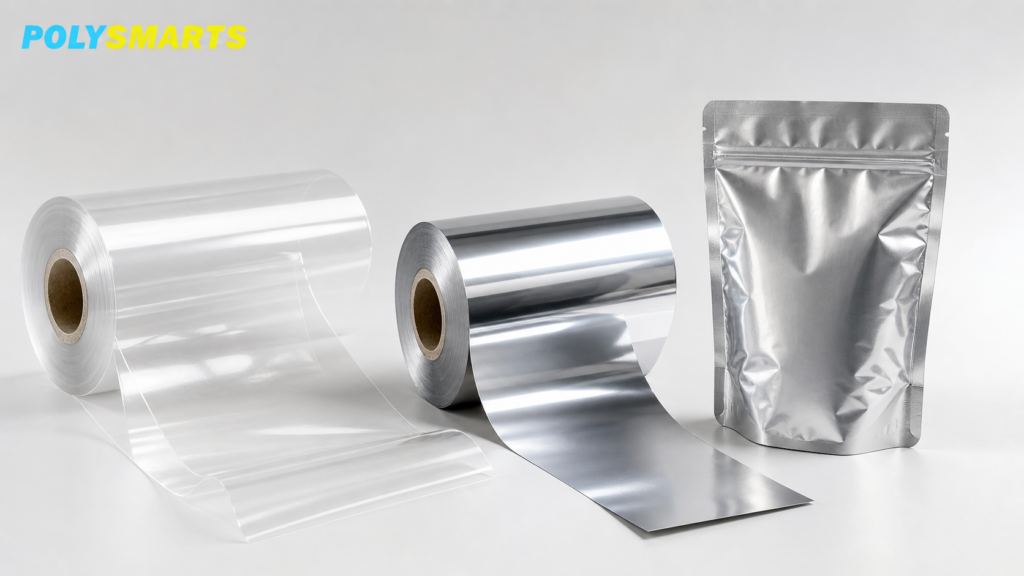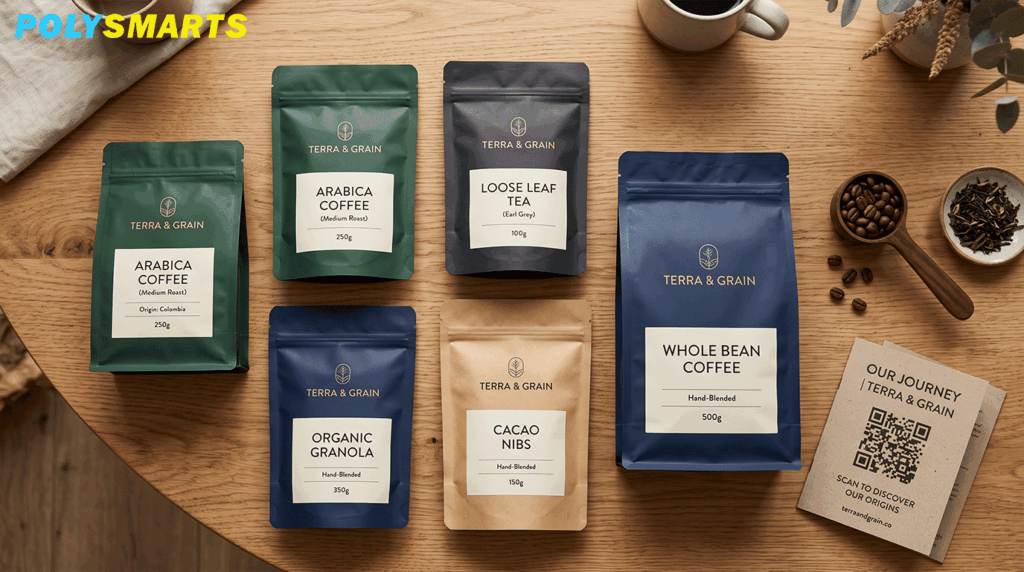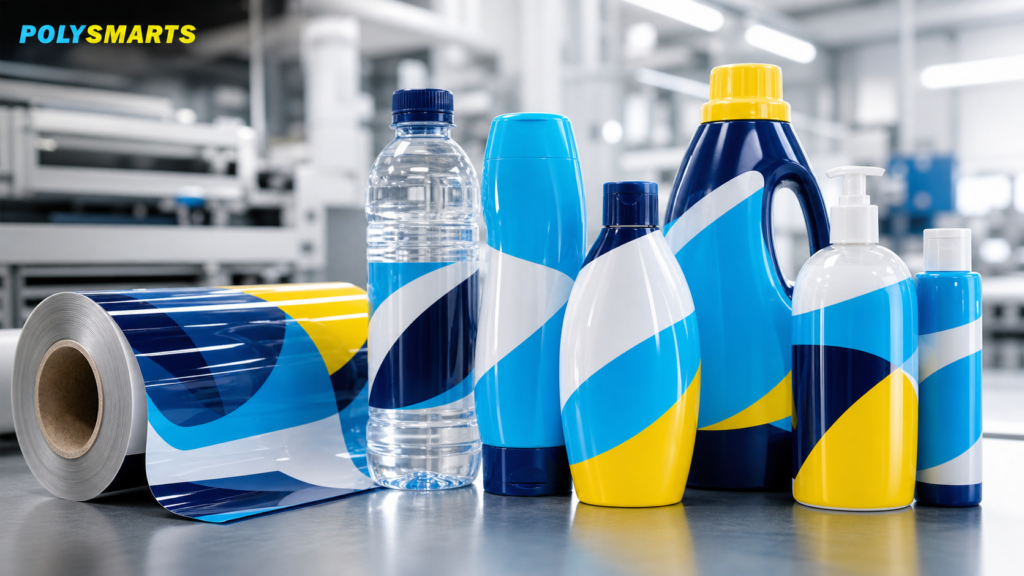
Plastic shrink sleeve packaging uses a printed, heat-shrinkable film tube that conforms to a container when controlled heat is applied. It can decorate nearly the full container, follow complex shapes, combine graphics with tamper evidence, and support many package sizes. Successful sleeves require the film, container, artwork distortion, seam, application equipment, and heat tunnel to work as one system.
Quick answer: Shrink sleeves are best evaluated when a brand needs high graphic coverage, decoration around curves, SKU flexibility, or a tamper-evident neck band. Choose the sleeve by matching container geometry and resin, required shrink curve and force, printing method, seam, applicator, tunnel, line speed, and recycling design. Do not select film by resin name or maximum shrink percentage alone.
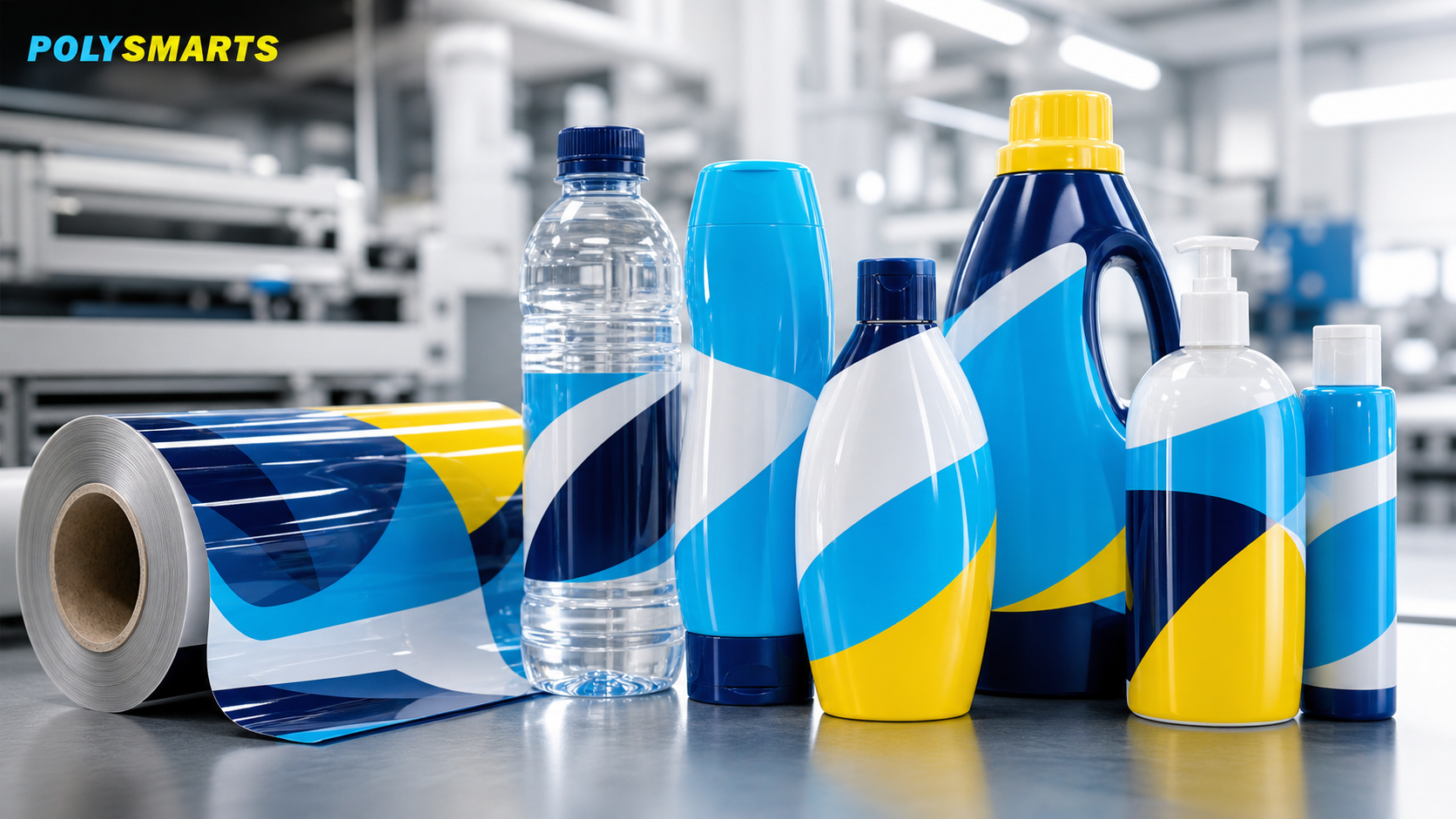
A shrink sleeve is a film label formed into a tube. The converter usually reverse-prints the graphics so the ink sits behind the clear film, forms the web into a tube, and solvent-seams or otherwise joins it. On the packaging line, the sleeve is cut, placed over the container, and heated with steam, hot air, infrared energy, or a combination. The oriented film contracts toward its original, lower-stress state and fits the container.
A shrink sleeve label is different from shrink bundling or transit film. A sleeve primarily decorates or provides tamper evidence on an individual container. Bundling film holds multiple products together or protects an item for distribution. They use different film behavior, thickness, equipment, and specifications.
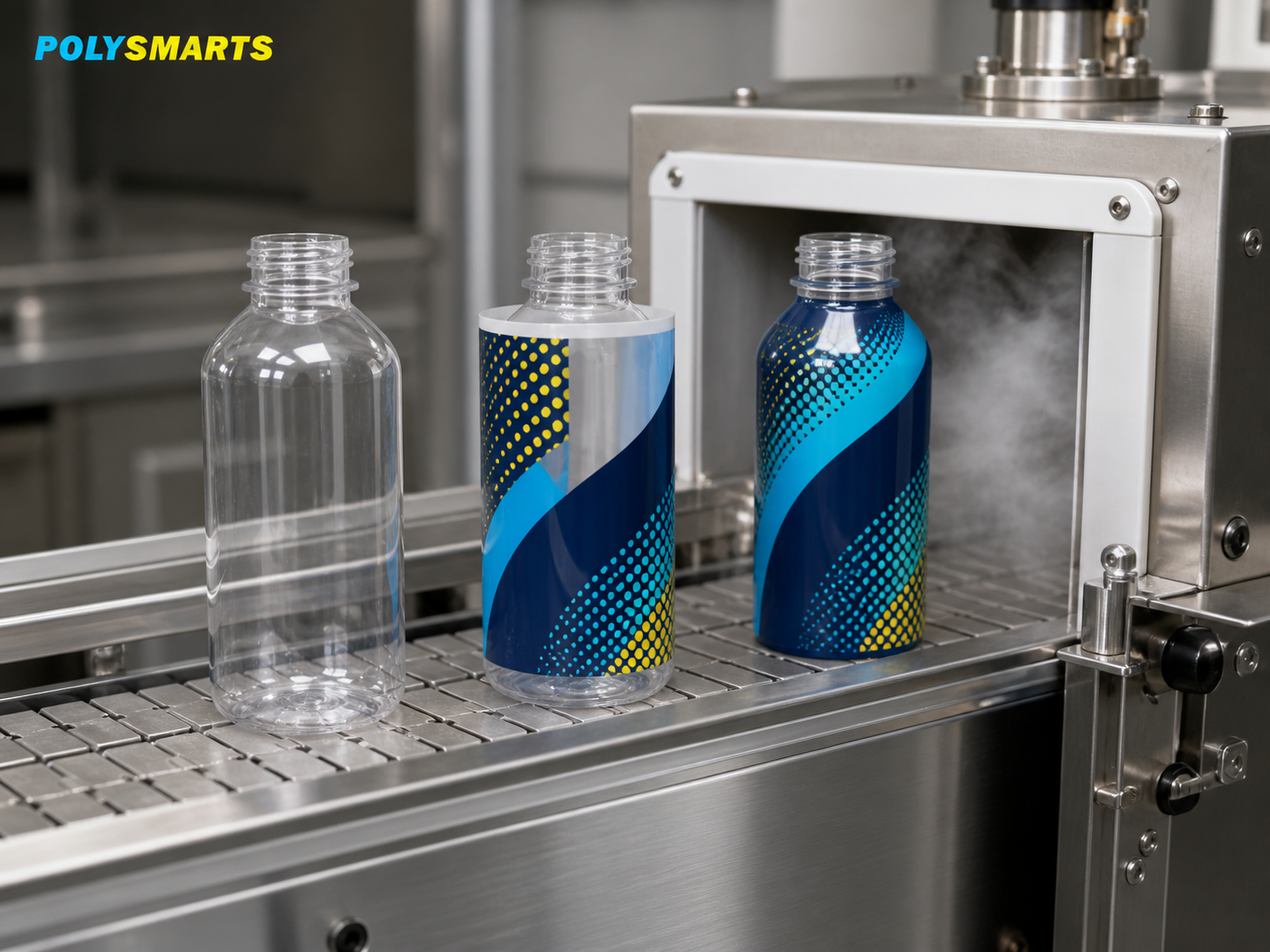
These cover most of the container sidewall and may extend over shoulders or toward the base. They provide extensive design space and can mask container color or content when an opaque white layer is used. High coverage also increases the need to evaluate sorting and recycling compatibility.
Partial sleeves decorate a selected section while leaving more of the container visible. They may use less label material and can make container detection easier, depending on coverage, film, and inks.
A band over the closure and neck can provide visible evidence of opening. It must be designed so removal is clear and the band does not interfere with opening or create sharp remnants. A tamper-evident band is not automatically child-resistant and should never be described that way without a compliant package system and testing.
A single sleeve may combine body graphics and tamper evidence, often with horizontal or vertical perforations for controlled removal. Perforation quality, tear initiation, placement, and consumer instructions need testing.
Common families include PETG and other shrink polyesters, PVC, OPS, PLA, and polyolefin-based films. Commercial grades within one family can behave differently. Always compare the actual datasheet, tube, print construction, container, and tunnel trial.
Phone users can swipe horizontally to view the full table.
| Film family | Potential strengths | Key limitations | Verify before selection |
|---|---|---|---|
| PETG / shrink polyester | High-shrink grades, clarity, print quality, and fit on complex shapes | Shrink force, heat demand, density, and potential incompatibility with PET-bottle recycling unless designed and tested for the stream | Shrink curve, force, density, coverage, inks, perforation, and bottle-stream guidance |
| PVC | Established processing window and conformability in suitable applications | Recycling-stream contamination concerns and brand/retailer restrictions; formulation and disposal require review | Destination-market restrictions, container compatibility, heat profile, and end-of-life impact |
| OPS | Lower shrink force and useful conformability for some heat-sensitive or thin-wall containers | Storage stability, brittleness, availability, and recycling compatibility can limit use | Storage conditions, age, shrink profile, impact, and local recovery rules |
| PLA | Bio-based resin origin and useful shrink behavior in selected grades | Bio-based does not mean home-compostable, biodegradable in nature, or compatible with bottle recycling; heat and storage limits require attention | Certification scope, composting access, container stream, heat response, and storage |
| Polyolefin-based shrink film | Low-density options may separate from PET in float-sink systems when the complete printed sleeve is designed accordingly | Shrink range, stiffness, optics, print handling, and supply options vary by grade | Printed sleeve density, ink behavior, shrink performance, coverage, and recycler protocol results |
Shrink sleeves are used on beverages, dairy drinks, condiments, sauces, nutraceuticals, household cleaners, laundry products, cosmetics, personal-care products, automotive fluids, and other consumer packages. The product category alone does not determine suitability. Consider container heat sensitivity, contents, fill level, closure, product-contact risk, line sanitation, moisture, storage, and regulatory labeling.
For aerosols, chemicals, pharmaceuticals, food, and products used by children, specialized regulations and risk controls may apply. A decorative sleeve does not establish chemical resistance, food-contact compliance, child resistance, or tamper-evident compliance by itself.
ASTM D2732 characterizes unrestrained linear thermal shrinkage at selected temperatures, while ASTM D2838 addresses shrink tension and orientation release stress. These film tests are useful inputs, but finished-package trials remain essential.
Shrink sleeves can eliminate a separate pressure-sensitive adhesive, but that does not make the decorated package recyclable. The Association of Plastic Recyclers notes that high-coverage sleeves can affect near-infrared identification of the container. Film polymer and density, coverage, inks, coatings, opacity, perforations, and whether consumers or recycling equipment can separate the sleeve all affect the result.
For PET bottles, do not assume a PET-family sleeve is compatible simply because the bottle is PET. Some polyester sleeve materials, inks, or printed constructions can behave differently in sorting and reprocessing. Follow the current design guide for the destination market and test the complete decorated package. Qualify “recyclable,” “compostable,” “bio-based,” and material-reduction claims with specific evidence.
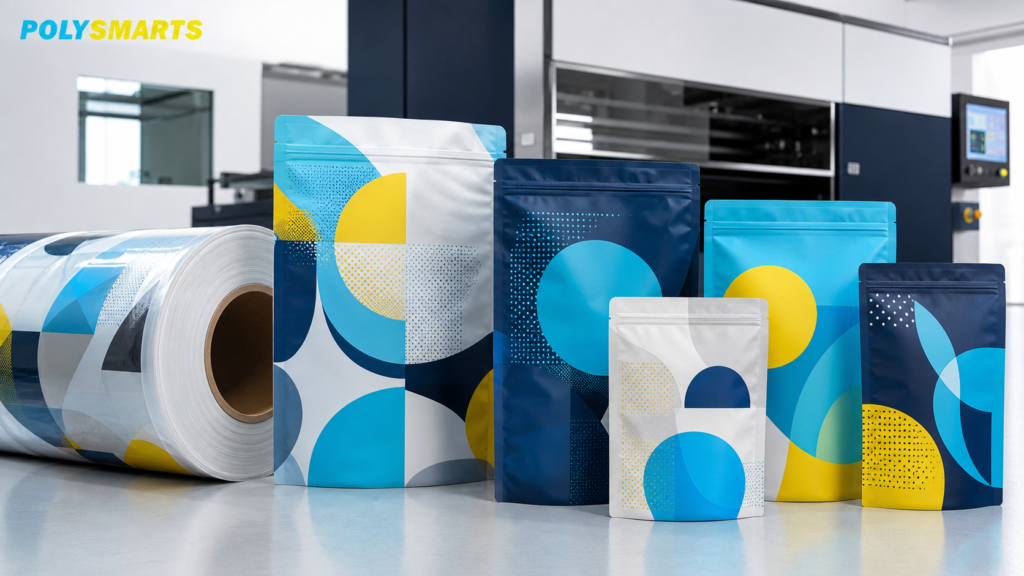
Explore Polysmarts’ custom film roll options, including the heat-shrink film roll listing currently shown in the category. Request the actual material grade, shrink data, print and seam specification, MOQ, lead time, and application-trial plan for your project before approval.
It is a heat-shrinkable printed film tube applied over a container. Controlled heat causes the oriented film to contract and conform to the container’s shape, creating a body label, tamper-evident band, or both.
A shrink sleeve usually decorates or provides tamper evidence on one container. Shrink wrap commonly bundles products or protects an item for transport. Their film thickness, shrink behavior, printing, and machinery are not interchangeable.
No film family is universally best. PETG, PVC, OPS, PLA, and polyolefin-based films offer different shrink curves, force, optics, storage, application, and recycling characteristics. Select the actual grade through container and tunnel trials.
They can fit many complex shapes, but severe diameter changes, handles, deep recesses, sharp shoulders, low-friction surfaces, and heat-sensitive containers can be difficult. Geometry, maximum local shrink, trapped-air paths, and tunnel control determine feasibility.
They may be printed by gravure, flexographic, or digital processes, depending on the supplier, film, volume, colors, and versioning needs. Graphics are often reverse-printed so the film protects the ink after application.
Some decorated packages can meet a specific recycling program’s design criteria; others interfere with sorting or contaminate the container-resin stream. Verify film density and polymer, coverage, inks, coatings, separability, and complete-package test results for the destination market.
A neck band or perforated sleeve can provide visible evidence of opening when properly designed and tested. Not every body sleeve is tamper-evident, and tamper evidence is not the same as child resistance.
Wrinkles can result from incorrect sleeve size, uneven heat, trapped air, poor placement, container variation, excessive shrink, friction, or an unsuitable tunnel profile. Diagnose the finished system rather than changing temperature alone.
Approve a production-representative sleeved container made with the specified film, print, seam, applicator, and tunnel. Record graphics, color, position, distortion, wrinkles, barcode performance, perforation, container condition, and acceptance limits.
Plastic shrink sleeve packaging offers high-impact graphics and strong shape conformity, but the film is only one part of the system. Reliable results come from matching the container, shrink curve and force, artwork distortion, seam, applicator, tunnel, line speed, inspection, and recovery pathway. Specify measurable requirements and approve the finished decorated package under production conditions.
To begin supplier qualification, review Polysmarts’ film roll collection and send the container, line, artwork, quantity, and performance details listed above.
 English English
  Français
 Español
 Deutsch
 Português
 日本語
日本語
 العربية
 한국어
한국어
 简体中文
简体中文