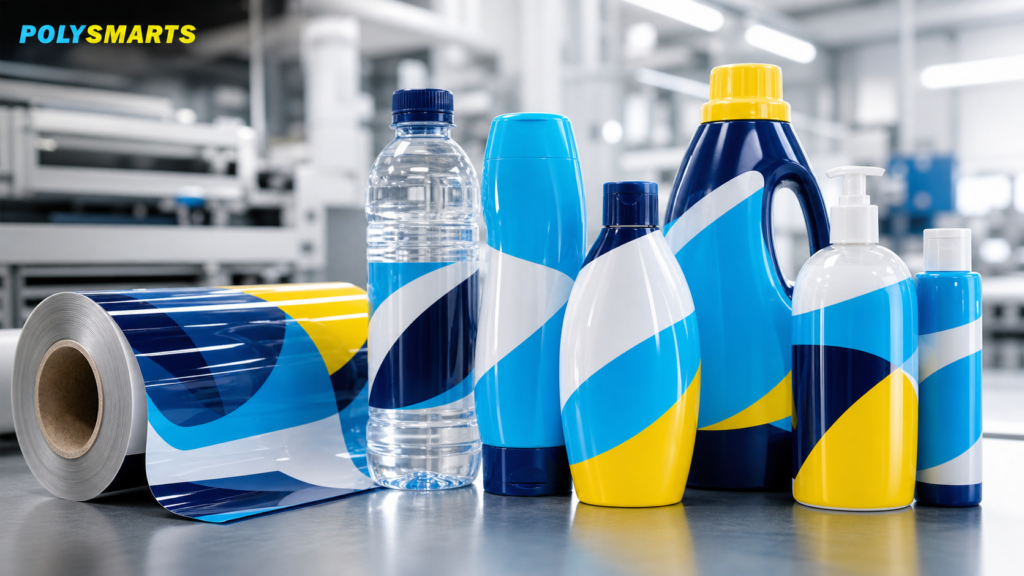
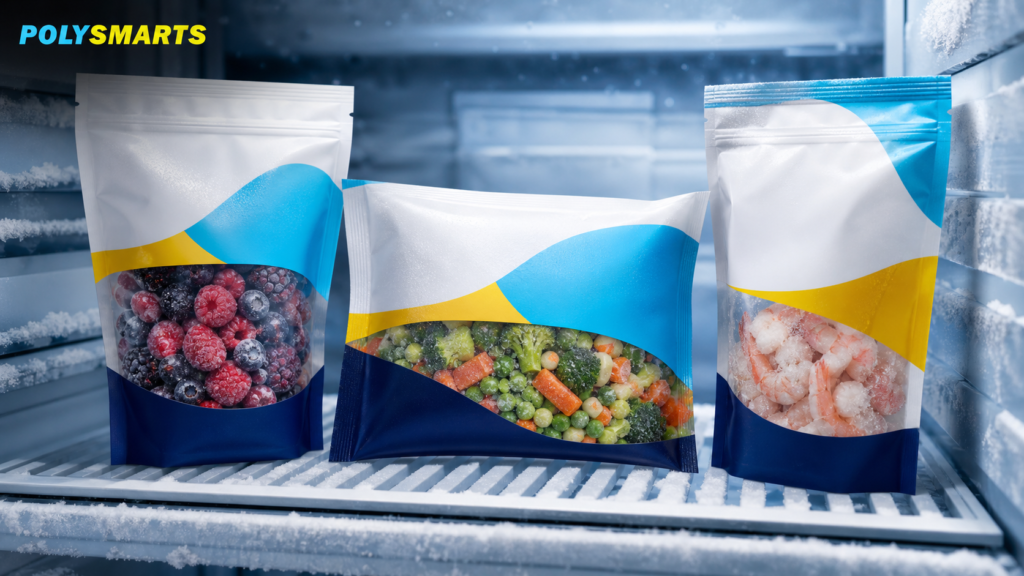
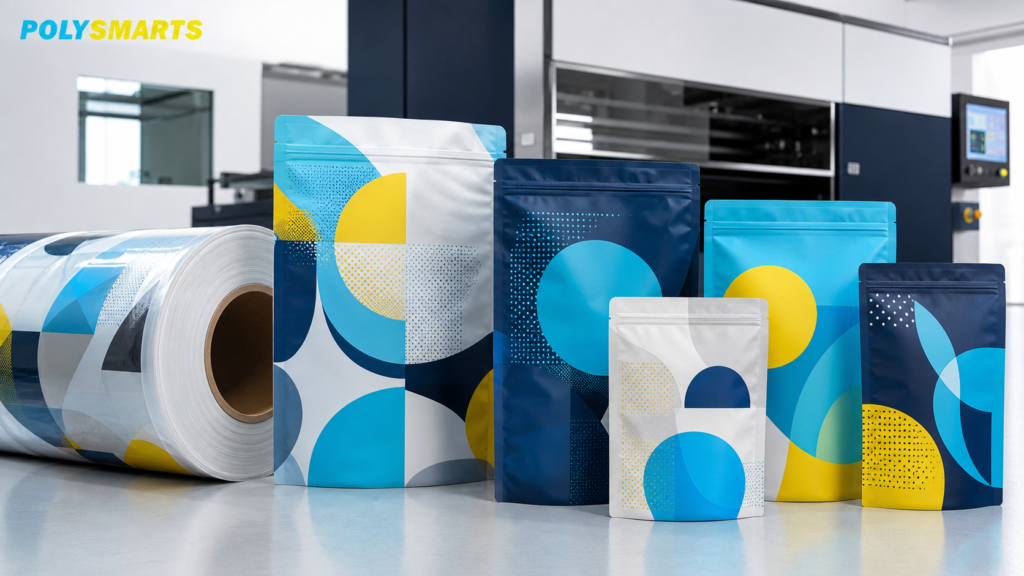
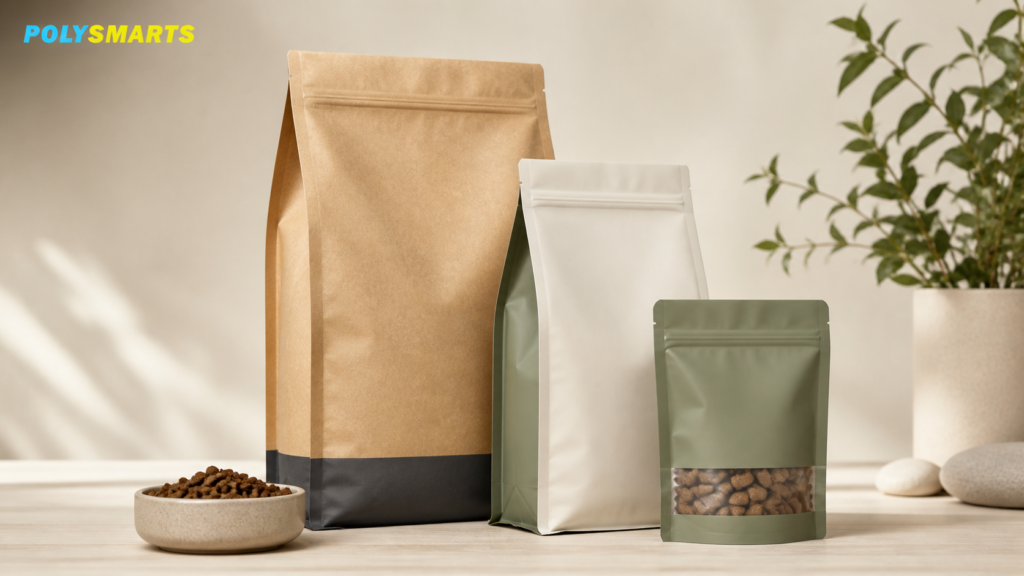
In product packaging, the phrase usually means custom-printed plastic bags or pouches designed for a particular brand and use. The package may be a stand-up pouch for snacks, a flat pouch for a sample, a side-gusset bag for coffee, a flat-bottom bag for pet food, or rollstock for automated form-fill-seal equipment.
This is different from a promotional checkout bag. A retail carry bag is specified mainly for carrying strength, handle design, local bag rules, and branding. A primary product package may also need oxygen, moisture, aroma, grease, light, puncture, or chemical resistance. If the package touches food, its suitability depends on the complete material construction and the intended food and conditions of use—not merely the word “plastic.”
Custom packaging creates more consistent brand cues across a shelf, subscription box, marketplace image, or unboxing experience. Color, logo placement, typography, shape, finish, and a clear product hierarchy can help shoppers identify the brand and understand the offer quickly.
That does not guarantee higher sales. Visibility depends on the retail environment, competing products, artwork quality, print consistency, package orientation, lighting, and whether the design communicates at thumbnail and shelf distance. Treat the bag as a testable brand asset:
| Format | Useful for | Key decisions |
|---|---|---|
| Stand-up pouch | Snacks, powders, pet treats, household products | Bottom-gusset stability, zipper position, fill opening, display area |
| Three-side-seal or flat pouch | Samples, single portions, medical or technical components | Tear initiation, seal width, notch location, fill method |
| Flat-bottom pouch | Coffee, premium foods, heavier dry products | Panel alignment, bottom strength, zipper or valve needs |
| Side-gusset bag | Coffee, bulk dry goods, pet food | Gusset expansion, seam location, top closure, stacking |
| Spouted pouch | Liquids, gels, concentrates | Fitment compatibility, torque, leak testing, filling process |
| Printed rollstock | Automated form-fill-seal lines | Web width, repeat length, unwind, eye mark, coefficient of friction |
Browse Polysmarts’ plastic packaging bags to compare available product categories, then request a construction based on the actual application.
A pouch described as “plastic” may be a single-layer film or a multilayer structure in which each layer performs a different job. One layer may support printing, another may add strength or barrier, and the inner layer may provide the sealing surface. Common material families include:
Do not select a structure from a generic material name alone. Ask for measured barrier data where shelf life matters, plus seal-window, puncture, drop, flex-crack, chemical-compatibility, and migration information appropriate to the product.
For U.S. food applications, the regulatory status of each food-contact component must cover the intended use. Conditions can differ for hot fill, refrigeration, frozen storage, reheating, boiling, sterilization, or room-temperature use. Confirm the food type, contact time, temperature, and any fatty or acidic characteristics with the packaging supplier and a qualified regulatory reviewer.
| Method | Often considered when | Watch for |
|---|---|---|
| Digital | Multiple SKUs, variable graphics, prototypes, or shorter runs | Available films, color matching, white ink, finishing, and economics at scale |
| Flexographic | Recurring medium-to-large runs across many flexible films | Plate cost, screening, trapping, fine type, and repeat consistency |
| Gravure | Long runs requiring high-detail, repeatable reproduction | Cylinder cost, setup, lead time, and change frequency |
No process is automatically best. Compare total project cost, run length, number of versions, substrate availability, quality target, change frequency, and future reorders. Request a production-representative proof when color or small details are critical.

Lower material use, recycled content, mono-material design, reuse, recyclability, compostability, and biodegradability are different claims. Each needs its own evidence and qualifications. For example, a package should not be described broadly as “recyclable” if appropriate collection is unavailable to a substantial share of the audience, and an unqualified “eco-friendly” claim can imply benefits that have not been proven.
Start with the market where the package will be sold and the actual disposal pathway. Ask which components—including zipper, valve, inks, coatings, and adhesives—are included in the claim. Keep current supplier documentation and legal review with the artwork record.
Polysmarts offers custom plastic packaging bags across multiple pouch and bag formats. Share the application details above so the quotation can address the product rather than only its appearance.
A signed visual proof does not define every aspect of an acceptable delivery. Put measurable tolerances and inspection methods in the purchase specification before the production run. Depending on the application, the agreement may cover finished width and length, film or laminate thickness, seal width and position, zipper placement, print-to-cut registration, color tolerance, surface defects, odor, coefficient of friction, roll splice limits, winding quality, carton quantity, and sampling method.
Also define which approved item controls the result: a digital PDF, contract proof, color target, physical prototype, or signed production sample. State how nonconforming units will be evaluated and what records must accompany the shipment. For a first order or material change, retain representative samples and record filling-line settings. This creates a practical reference for later reorders and helps separate an artwork issue from a printing, laminating, converting, filling, or sealing issue.
Buyer’s rule of thumb
Approve the filled, sealed, printed package under realistic conditions. A beautiful empty sample does not prove shelf life, line performance, seal integrity, distribution durability, or regulatory suitability.
Usually, but “personalized” may refer only to graphics. A fully custom package can also change the size, format, material structure, barrier, closure, finish, and production specifications.
Stand-up, flat-bottom, and side-gusset formats offer different printable panels. The best choice depends on shelf orientation, filled shape, stability, merchandising, and the amount of required information.
There is no universal best plastic. The correct construction depends on the contents, shelf life, temperature, barrier, sealing, filling line, distribution, appearance, compliance, cost, and end-of-life goals.
They can be designed for food contact, but suitability is specific to the complete construction and intended conditions of use. Confirm the relevant regulatory status and supporting documentation before use.
It can improve recognition and communication, but sales impact is not guaranteed. Test artwork and track defined outcomes such as conversion, sell-through, qualified inquiries, repeat purchases, or returns.
Digital printing is often considered for shorter runs and multiple designs, but the economic crossover depends on size, material, finishing, quality target, number of SKUs, and supplier capabilities.
Possibly, but recyclability depends on the entire package and the collection, sorting, and reprocessing system available to consumers. Confirm the market-specific pathway and qualify claims appropriately.
A digital proof is useful for layout and content, but it may not predict substrate appearance, color, finish, seals, or formed-package distortion. Use a production-representative proof or sample when those factors are critical.
Testing may include fill fit, seal integrity, leak, drop, compression, puncture, abrasion, barrier, compatibility, storage, shipping, opening and reclosure, barcode scanning, and filling-line trials. Build the test plan around actual risks.
 English English
  Français
 Español
 Deutsch
 Português
 日本語
日本語
 العربية
 한국어
한국어
 简体中文
简体中文