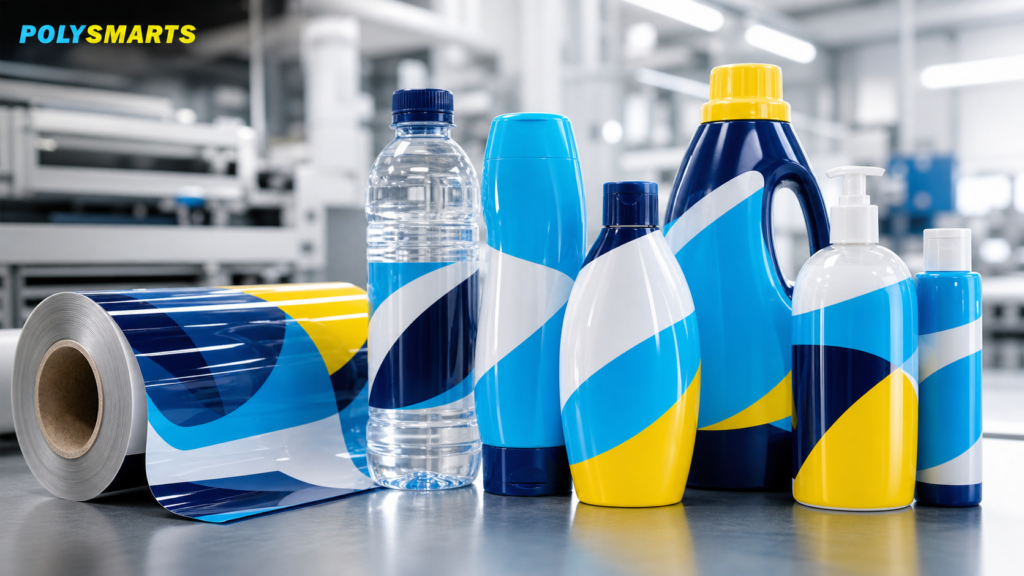
Food custom packaging is packaging engineered and printed for a specific food, filling process, distribution route, shelf-life target, consumer use, and brand. Current innovation is moving toward easier-to-recycle structures, material reduction, digital print flexibility, convenient closures, and connected features—but a trend is useful only when the finished package protects the food, seals reliably, runs efficiently, and supports accurate claims.
Quick answer
Start with the food and process, not the trend. Define the food type, fill temperature, sensitivity to oxygen, moisture and light, storage conditions, required shelf life, filling and sealing equipment, distribution stresses, and opening experience. Then compare formats, material structures, printing methods, features, compliance evidence, and end-of-life pathways. Validate the filled package before a production launch.

Customization goes beyond placing a logo on a stock bag. A project may specify finished dimensions, gussets, film structure, barrier, opacity, sealant, zipper, valve, spout, tear notch, hang hole, surface finish, print process, artwork versions, roll direction, and packing method.
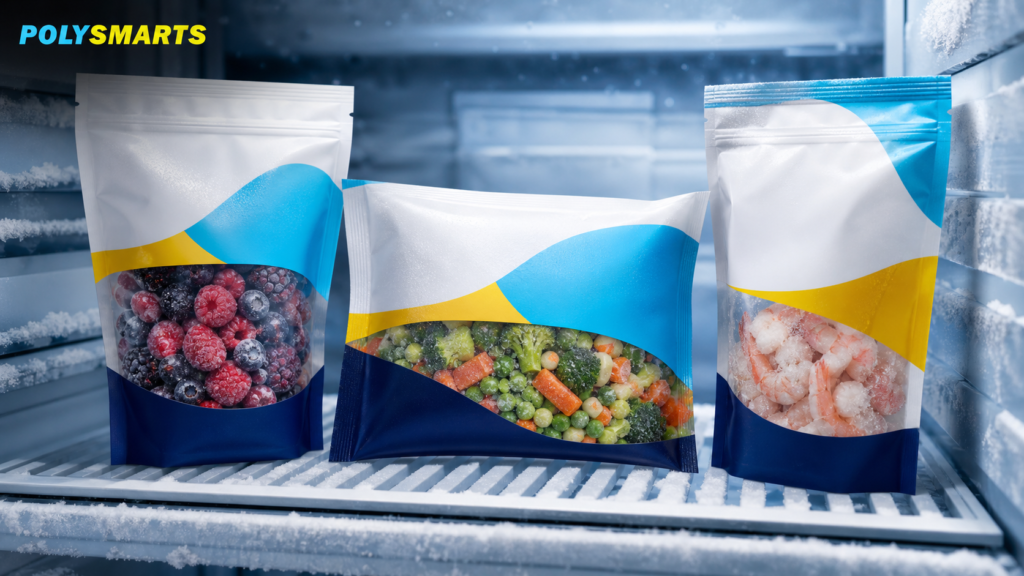
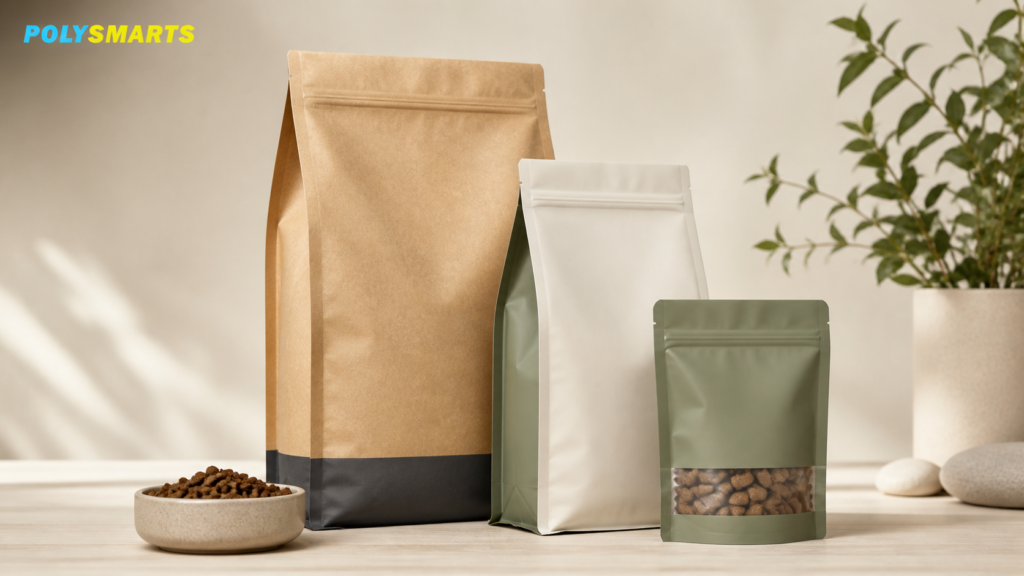
The correct combination changes by application. A crisp snack may need moisture protection and dependable seals around crumbs. Frozen vegetables may require flex-crack and puncture resistance at low temperature. Fat-rich pet food can need oxygen, aroma, grease, and distribution protection. A liquid pouch adds fitment, torque, leak, and drop requirements. These are different engineering briefs even when every package is called a pouch.
Brands are evaluating mono-material-oriented structures and component simplification. The practical question is not whether every layer shares a familiar polymer name; it is whether the complete package—including zipper, valve, inks, coatings, adhesives, labels, and residue—meets the acceptance rules of a real collection and reprocessing system in the target market. Barrier and sealing performance still need validation.
Down-gauging and right-sizing may reduce package weight, shipping volume, or headspace. Too little material can increase punctures, seal failures, food loss, or line interruptions. Compare the new package with a defined baseline and test the complete distribution cycle before making a source-reduction claim.
Post-consumer recycled content is increasingly considered, but food-contact use is not automatic. Source control, recycling process, contaminants, additives, functional barriers, food type, temperature, contact time, and the applicable regulatory basis all matter. Keep supplier evidence tied to the exact material and intended use.
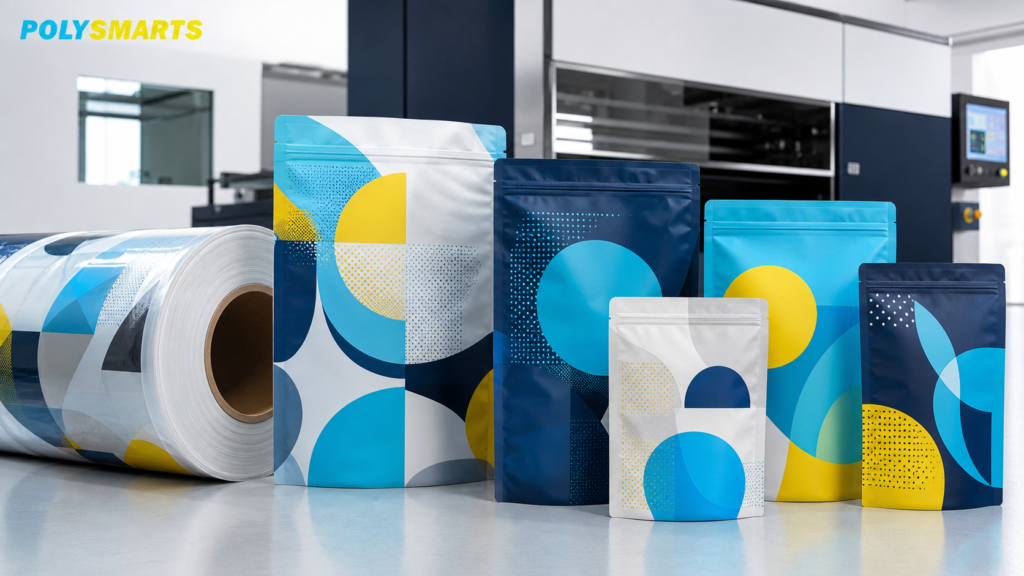
Digital printing can support shorter runs, multiple flavors, regional versions, trials, and artwork changes without conventional plates or cylinders. It is not universally lowest-cost or available for every film and finish. Compare color expectations, white ink, overprint protection, lamination, pouch conversion, version control, run length, and reorder economics with flexographic or gravure printing.
Resealable zippers, sliders, tear notches, laser scoring, spouts, handles, and easy-open seals can improve use. Each feature also changes the package. A zipper can affect fill opening and sealing; a score can influence barrier and tear propagation; a spout adds leak paths and closure requirements. Test with representative users and filled packs.
QR codes and other digital links can provide preparation instructions, traceability information, promotions, or disposal guidance without crowding the principal display panel. The code must remain scannable after printing, forming, filling, sealing, chilling, abrasion, and condensation. Maintain the destination page, privacy disclosures, and version history for the life of the product.
A window may help shoppers see the food, while matte, gloss, tactile, metallic, or transparent effects can establish hierarchy. These choices can affect light barrier, registration tolerances, scuff resistance, recyclability evaluation, cost, and lead time. Treat decoration as part of the total structure, not a separate graphic decision.
| Application | Common risks to define | Features to evaluate | Validation focus |
|---|---|---|---|
| Dry snacks | Moisture gain, oxidation, aroma loss, grease, crumbs in seals | Pillow bag, stand-up pouch, zipper, easy opening, window | Barrier, seal contamination, burst, drop, sensory shelf life |
| Frozen food | Low-temperature brittleness, puncture, flex cracking, moisture, freezer handling | Lay-flat bag, stand-up pouch, zipper, robust seal geometry | Freeze-thaw, drop, abrasion, seal integrity, dimensional fit |
| Dry pet food and treats | Fat oxidation, aroma, grease, puncture, heavier fill and distribution | Flat-bottom or side-gusset bag, zipper or slider, handle | Barrier, top-load, drop, carry, reclosure, seal strength |
| Sauces and liquids | Leaks, product compatibility, hot-fill or process temperature, flexing | Spout, cap, shaped pouch, controlled dispensing | Fitment seal, torque, pressure, drop, storage orientation |
Phone users can swipe horizontally to view the complete table.
For format-specific exploration, compare Polysmarts’ pages for snack food packaging, frozen food packaging, and pet food packaging. Treat page examples as a starting point; the final specification must match the actual product and process.
Many high-performance food pouches combine several functions. An outer web can provide printability, stiffness, and abuse resistance. A middle layer may contribute oxygen, moisture, aroma, or light barrier. An inner sealant layer creates the food-contact and heat-seal surface. Adhesives, inks, coatings, closures, and fitments become part of the complete construction.
Performance is determined by that complete package and its conversion quality. Nominal material names do not establish shelf life. Barrier data, seal initiation and operating window, hot tack, puncture, flex-crack, coefficient of friction, and chemical compatibility may be relevant. The filling line, product contamination in the seal area, storage humidity, temperature, headspace, and package surface area can change results.

| Potential benefit | Related limitation or tradeoff | How to evaluate it |
|---|---|---|
| Tailored product protection | Higher barrier or toughness can add material or complexity | Shelf-life study plus distribution and seal testing |
| Large printable area | Gussets, folds, seals, and forming can distort artwork | Dieline review and formed, filled production proof |
| Lower package mass than some rigid formats | Recovery pathways may be limited for multilayer flexible packs | Life-cycle comparison and market-specific recovery review |
| Convenient closures and shapes | Features add interfaces, cost, and possible failure points | User study, leak/drop test, and reclosure-cycle testing |
Phone users can swipe horizontally to view the complete table.
For a U.S. food application, determine whether every food-contact substance in the finished construction has an appropriate regulatory basis for the intended food and conditions of use. Room-temperature dry food, refrigerated food, frozen food, hot fill, boiling, retort, and reheating are not interchangeable conditions. Recycled plastic also requires attention to source control, contaminant removal, additives, migration, food type, temperature, contact duration, and repeated or single use.
Environmental marketing requires similar precision. “Eco-friendly,” “recyclable,” “compostable,” “biodegradable,” “made with recycled content,” and “uses less material” are separate claims. Substantiate the exact claim, identify the component and comparison basis, and qualify collection or facility limitations. Technical recyclability alone does not prove that consumers have access to an appropriate program.
A trial should answer predetermined questions, not merely produce a few attractive samples. Use production-representative food, film, closures, equipment, operators, settings, and distribution conditions. Record seal temperature, pressure and dwell where applicable; line speed; rejects; wrinkles; tracking; static; code quality; fill contamination; and any adjustments. Retain samples from the beginning, middle, and end of the run.
After filling, evaluate the risks defined in the brief. Depending on the product, that may include seal strength, leak or burst performance, drop and compression, puncture, abrasion, freeze-thaw exposure, opening force, reclosure cycles, barcode scanning, sensory quality, and storage stability. Compare results with written acceptance criteria and an approved control package. If artwork, film, adhesive, ink, closure, dimensions, equipment, or processing conditions change later, use change control to decide which tests must be repeated. This evidence turns an interesting packaging trend into a qualified production specification.
Review Polysmarts’ packaging examples and bag categories, then send the application details above. A useful quotation should address the food, process, performance, artwork, validation, and supply requirements—not only dimensions and price.
It is packaging specified for a particular food, process, shelf life, distribution system, consumer use, and brand. Customization can include dimensions, format, materials, barrier, seals, closures, printing, finish, and production controls.
There is no universal best material. The correct structure depends on the food, contact conditions, barrier needs, sealing and filling equipment, storage, distribution, compliance, appearance, cost, and disposal pathway.
They may be designed for a particular recycling stream, but acceptance depends on the complete package and local collection, sorting, and reprocessing capabilities. Verify current program rules before making a claim.
Potentially, when the recycling process and final use provide suitable purity and regulatory support. Food type, temperature, contact time, source control, contaminants, additives, and the exact construction require review.
It can support multiple designs and shorter runs, subject to available films, ink and overprint systems, lamination, migration controls, color requirements, finishing, conversion, and project economics.
Define low-temperature toughness, flex-crack, puncture, moisture, seal, freeze-thaw, filling, storage, and distribution requirements. Test filled packs at realistic temperatures rather than assuming a room-temperature sample will perform.
Not automatically. Shelf life also depends on the food, initial quality, processing, headspace, seals, storage, temperature, light, package area, and the actual barrier of the finished construction.
Approve content, dieline, dimensions, construction, print and color standard, features, roll direction, proof or sample, acceptance criteria, test plan, documentation, packing, and change controls.
The strongest food custom packaging is not simply the newest-looking option. It connects a defined food and lifecycle to measurable protection, reliable sealing, line compatibility, clear consumer use, supportable claims, and a controlled specification. Use trends as candidates, test them against the application, and approve the filled package before scaling.
 English English
  Français
 Español
 Deutsch
 Português
 日本語
日本語
 العربية
 한국어
한국어
 简体中文
简体中文