Which Smell-Proof Weed Bags Fits Your Product?
Which smell-proof weed bag fits the product you sell? Compare pouch formats, barrier structures, closures, sizing, testing, printing, and compliance questions before ordering custom cannabis packaging.

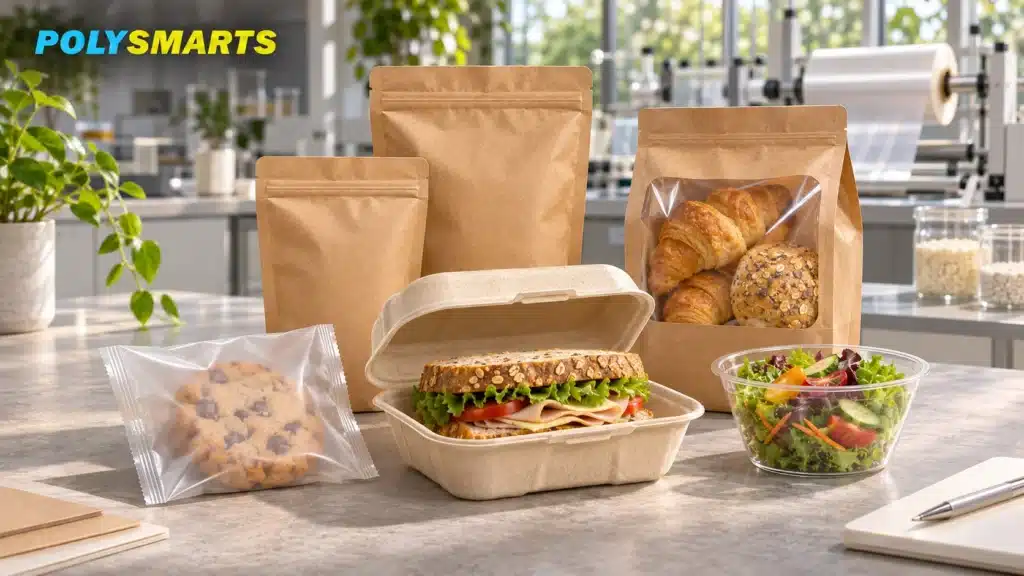
Compostable food packaging is packaging designed to break down under specified composting conditions. It can be a useful choice when the finished package is suitable for its food application and an accepting composting program can collect it with food scraps. A compostable label alone does not establish food safety, shelf life, or a practical disposal route.
For food brands, the buying decision starts with three questions: Will it protect the product? What evidence supports the claim? Where will customers actually send it after use? This guide explains how to answer those questions before changing your packaging specification.
Compostability describes a particular end-of-life pathway. It should refer to a tested item and its intended composting environment, rather than a package’s color or appearance. The U.S. EPA distinguishes commercially compostable plastic from products suitable for home composting.
Keep these terms separate:
Do not place compostable plastic in conventional plastic recycling merely because compost collection is unavailable. Follow the package instructions and local waste authority’s guidance.
The strongest starting point is often a food service operation with control over collection: a cafeteria, event venue, or similar site that has agreed its packaging choices with an organics processor. Staff training and clearly marked bins are part of the packaging system.
Food-soiled items that are difficult to recover through the available recycling system may be candidates. A retail food pouch is a different case: it travels through stores and households where collection arrangements vary. Treat that as a separate project, rather than assuming a successful cafeteria trial transfers directly to supermarket distribution.
On a phone, swipe horizontally to read the full comparison.
| Application | Why consider it? | Check before switching |
|---|---|---|
| Food service with separate organics collection | An identifiable route for food scraps and accepted packaging | Processor acceptance of each exact item; bin contamination controls |
| Bakery wraps and short-life food packs | A possible application for appropriately qualified materials | Grease resistance, moisture transfer, seal integrity, and food-contact use |
| Dry snacks, powders, or coffee pouches | A format some brands want to assess | Barrier performance throughout target shelf life; closures and valves |
| Frozen or chilled food | Potential only after application-specific qualification | Cold handling, puncture resistance, condensation, leaks, and shelf life |
| A package already accepted in local recycling | Compostability may offer little practical advantage | Compare actual collection outcomes before replacing the existing format |
Illustrative decision: a sandwich wrap used on one managed campus can be evaluated with that campus’s composter. The same wrap sold nationally needs a separate assessment of consumer instructions and collection availability.
Paper, cellulose-based films, and compostable polymer systems can look very different, yet appearance does not prove the status of the final package. A brown paper pouch may contain a coating, barrier layer, window, adhesive, or zipper that changes its end-of-life requirements.
Ask the supplier to identify the complete construction, including print, laminating adhesive, labels, closures, and accessories. Verify whether the certificate covers the supplied finished format and relevant thickness, rather than only an ingredient or an earlier version of the design.
Changing a zipper, adding a window, or replacing an ink may also require a fresh review of the certification scope. Lock the approved specification before placing repeat orders.
BPI’s commercial certification program uses ASTM D6400 as its base standard, with additional standards applicable to eligible product types. A standard is a technical specification; third-party certification is a separate assessment process. Check the certifier’s product listing and the supplier’s supporting documents.
Request the certification number, named product, composting environment, and permission to use any certification mark. Do not assume a commercial certificate supports a home-compostable claim. Certification also does not require every local processor to accept the item.
A compostability certificate is not a food-contact authorization. FDA guidance distinguishes food types and conditions of use; the relevant assessment can differ for dry food, fatty food, refrigeration, heating, or other processes.
Give the supplier the food type, contact duration, filling temperature, storage conditions, and any reheating requirements. Request documentation for that intended use and resolve gaps before packing food. Avoid treating an unspecific phrase such as “food grade” as a complete qualification file.
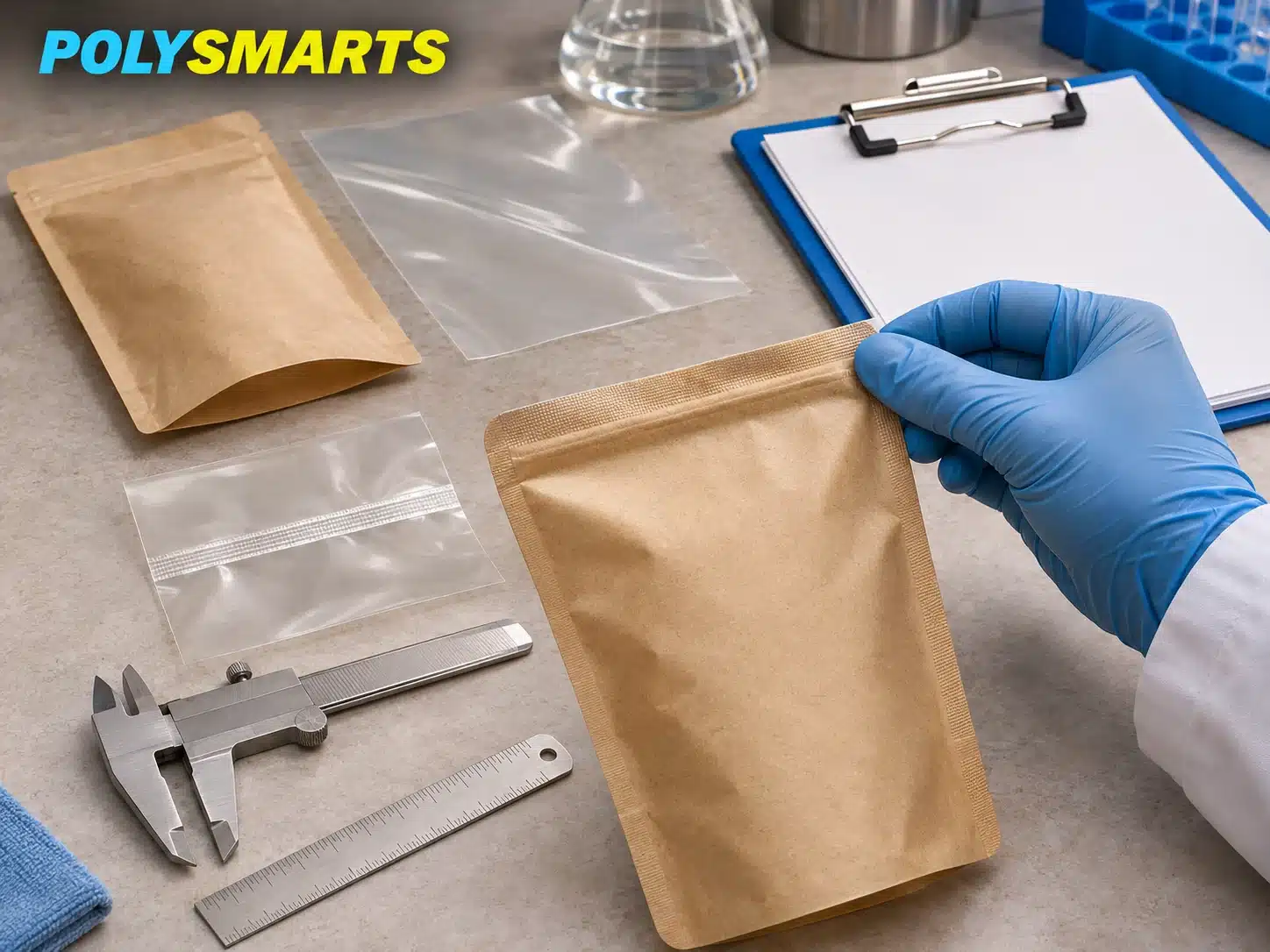
A package can satisfy an end-of-life specification and still be unsuitable for a particular food. Evaluate the complete filled pack against the current pack under agreed conditions.
Our guide to matching food packaging film to the product explains the wider specification process. For freezer applications, also review the handling requirements discussed in our frozen food packaging guide.
The FTC Green Guides summary calls for evidence supporting compostability claims and appropriate qualifications where home composting or facility availability is limited. Broad claims such as “eco-friendly” can suggest more than a specific attribute establishes.
Have the final artwork reviewed against the applicable requirements in the market where the food will be sold. Where accurate and supported, instructions should identify the relevant composting environment and explain that acceptance must be checked locally. Do not promise that the package disappears in a landfill, in the ocean, or when littered.
When requesting a quotation, provide pouch dimensions, product and fill weight, required barrier performance, packing process, closure preferences, artwork, order quantity, destination, and the exact certification claim you need to evaluate.
Explore Polysmarts packaging bag formats or send your packaging brief to our team. Material availability and any compostability or food-contact claim must be confirmed for the specific quoted construction; this guide is not a certification claim for the products shown.
Only where the specific item is suitable for home composting and the instructions support that use. Commercial compostability alone does not establish suitability for a backyard bin.
No. Check the complete construction, including coatings, windows, adhesives, and closures. Paper appearance does not establish the finished package’s status.
That depends on the structure, the food, the seals, and storage conditions. Request relevant performance data and validate the filled package against the required shelf life.
Follow local disposal instructions. Do not put compostable plastic into conventional plastic recycling as a substitute. Reconsider the packaging choice if the intended collection route is unavailable.
Compostable food packaging is most useful when an evidence-backed package, a suitable food application, and an accepting collection system work together. Choose it through a documented trial, rather than a visual impression or a broad environmental promise.
Discuss your food packaging requirements with Polysmarts and establish the performance and documentation needed before ordering.
Which smell-proof weed bag fits the product you sell? Compare pouch formats, barrier structures, closures, sizing, testing, printing, and compliance questions before ordering custom cannabis packaging.
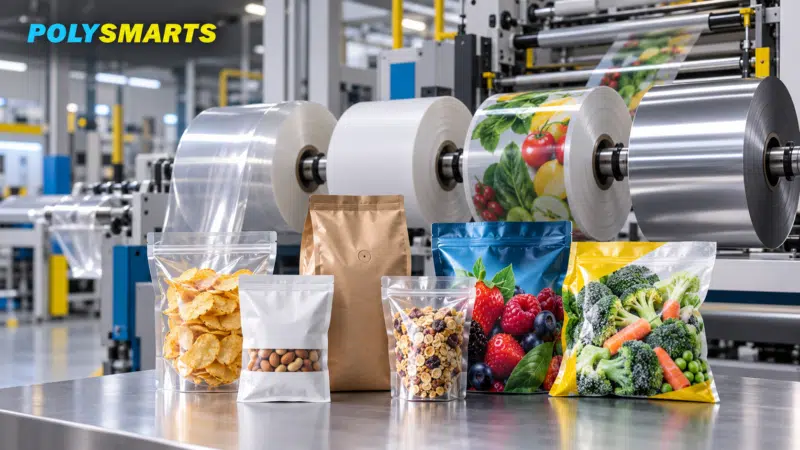
Food packaging film should match the product, process, and packing line—not a generic material trend. Learn how to specify barrier, seals, rollstock, printing, testing, food-contact suitability, and environmental claims without overengineering the package.
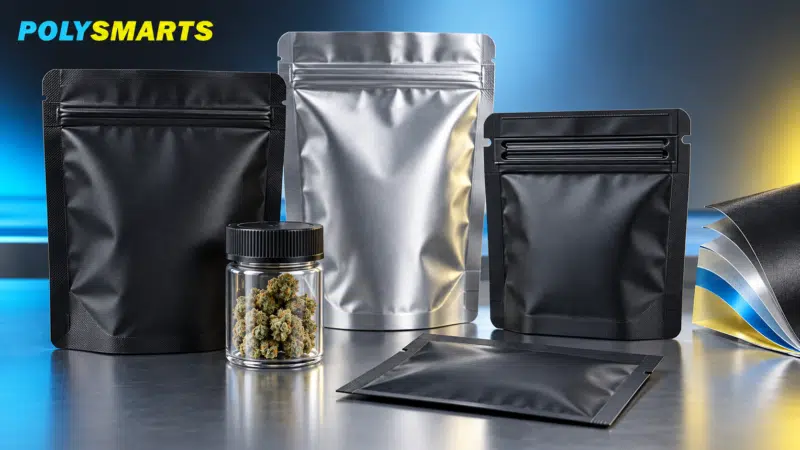
Learn how odor proof weed bags control aroma, which films and seals matter, how child-resistant claims work, and what cannabis brands should test.
 English English
 Français
 Español
 Deutsch
 Português
 日本語
 العربية
 한국어
 简体中文